
Best Way to Polish Marble in Dubai, and What It Actually Costs
If your marble has gone from glossy to dull, scratched, or slightly yellow around the edges, the best way to polish marble is not a single product you rub on once and forget. It is a process, and understanding which method actually works for your floor, table, or counter can save you from spending money on a fix that only lasts a few weeks.
Marble is a relatively soft, calcium-based natural stone. Its surface can lose its shine from years of foot traffic, direct sunlight coming through balcony doors, or hard water deposits on a counter. In Dubai, fine desert sand can get tracked indoors, including in villa communities like Al Wasl. Grit underfoot can gradually create fine scratches that scatter light instead of reflecting it evenly. Hard water deposits can also leave marks on kitchen counters and bathroom basins. In waterfront areas such as Dubai Marina and Bluewater Island, moisture and daily cleaning habits can add to the maintenance challenges. The right treatment depends on the stone’s condition, finish, and type of damage.
Which Is the Best Polish for Marble?
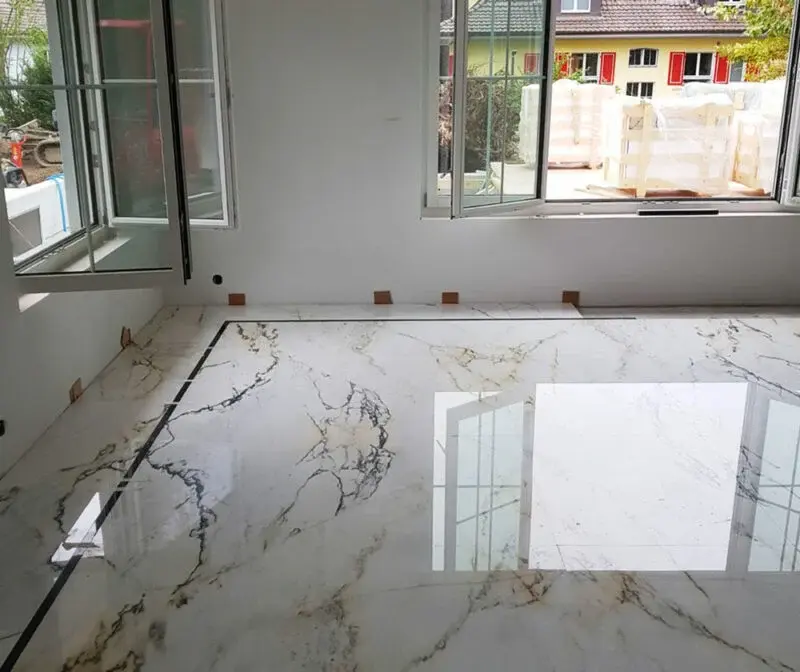
So what actually counts as the best polish for marble? There is no single bottled product that can repair every type of damage. Professional results usually come from choosing the right method for the condition of the stone. For floors with scratches, worn patches, or an uneven finish, mechanical polishing with suitable diamond abrasives may be needed. Finer abrasives help refine the surface after the damaged layer has been addressed.
Wax-based products sold in some hardware stores can create a temporary shine, but they form a layer on top of the marble rather than correcting the surface underneath. That coating may scuff, build up, or need repeated maintenance. It also will not repair deeper scratches or acid etching.
Marble polishing powders and compounds may help with certain types of light surface dullness when they are appropriate for the stone and finish. They are not a universal solution for deep scratches, chips, or staining. Using the wrong product can leave a patchy finish or make the damage worse.
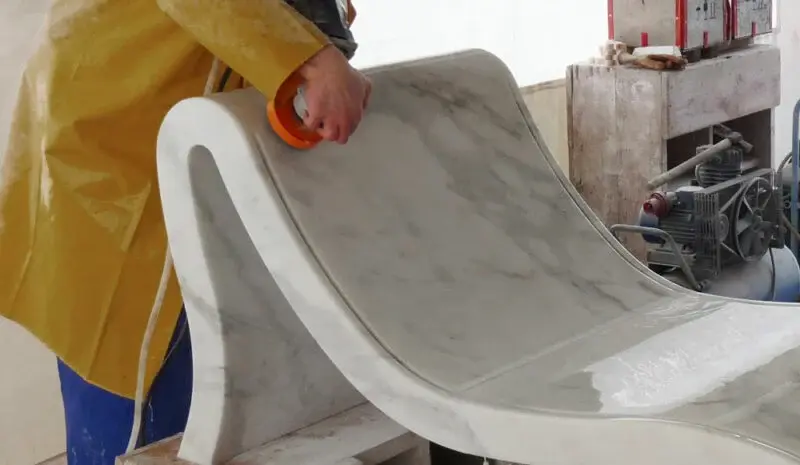
Important: A dull patch is not always dirt. It may be an etch mark caused by an acidic liquid, a fine scratch, mineral buildup, or worn polish. Identifying the cause first helps prevent unnecessary treatment.
What Is the Best Way to Polish Marble?
The best way to polish marble properly follows a sequence, and skipping the necessary preparation can affect the final result. The process starts with an inspection because marble types, finishes, and levels of damage differ. Carrara, Botticino, and other varieties can respond differently to polishing products and abrasive treatments.
If the floor has deep scratches or uneven tile edges, a technician may need to use coarser diamond abrasives to level the damaged surface before moving to finer grades. For floors that have been neglected for years, this work may form part of a complete marble restoration rather than a light polish. Finer abrasives are then used to refine the surface and achieve the required finish.
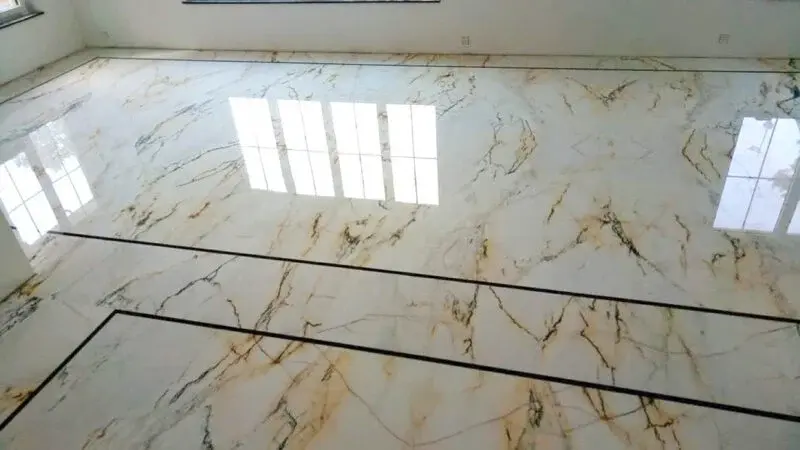
After polishing, the technician should assess whether sealing is appropriate for the stone and its intended use. A suitable penetrating sealer can reduce the absorption of certain liquids, helping with stain prevention. However, sealing does not make marble stainproof, prevent scratches, or stop acidic liquids from etching the surface. Good cleaning habits remain essential after restoration.
Can You Polish Marble at Home?
Not every marble surface needs professional treatment. If your floor, table, or counter has light surface dullness caused by everyday dirt, careful cleaning may improve its appearance. Start by removing loose dust and grit with a soft cloth or suitable dust mop so particles do not scratch the surface while you clean.
Use a pH-neutral cleaner made for natural stone, following the product instructions, and wipe the surface with a soft cloth. Avoid acidic cleaners such as vinegar or lemon-based sprays because they can etch marble and leave dull marks. Also avoid abrasive pads, scouring powders, and untested polishing compounds.
Be cautious with homemade treatments such as baking soda paste. Baking soda is mildly abrasive and may affect a polished finish, so it is not a reliable universal remedy for dull spots. If a mark remains after gentle cleaning, it may need a specific treatment rather than stronger scrubbing.
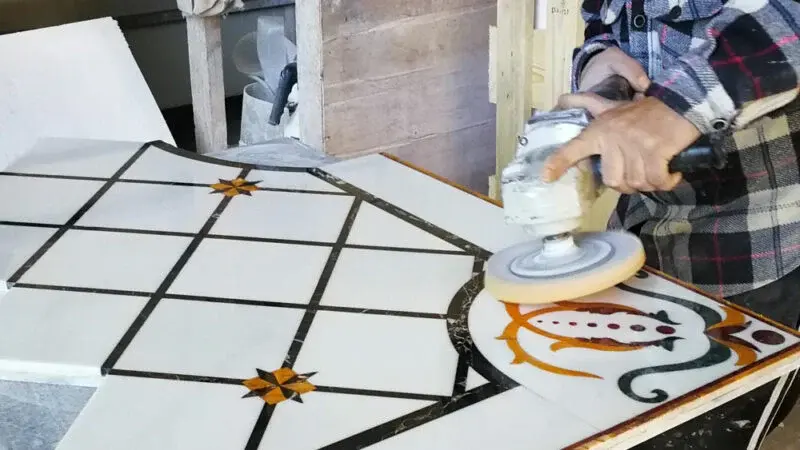
For routine upkeep, gentle cleaning is a good first step. If the marble still looks dull or has visible surface damage, our marble cleaning service can help address cleaning needs before you decide whether polishing or restoration is required.
Safe Marble Care: What to Do and Avoid
- Use a pH-neutral cleaner suitable for natural marble.
- Wipe spills promptly, especially coffee, citrus juice, vinegar, and other acidic liquids.
- Use soft cloths and non-abrasive cleaning tools.
- Keep loose sand and grit off floors and countertops where possible.
- Avoid wax coatings and aggressive polishing products unless they are suitable for your specific surface.
- Ask a stone-care professional to assess persistent dull patches, scratches, or stains before attempting stronger treatment.
Which Is the Best Marble Polishing Company in Dubai?
If the job is bigger than something you can handle at home, choosing the right marble polishing company in Dubai matters. A reliable starting point is a company that inspects the marble before confirming the scope of work and price, rather than quoting a fixed amount without understanding the condition of the stone.
Ask what method will be used, whether grinding or honing is needed, what finish is realistic, and whether sealing is appropriate after the work. For indoor projects, you can also ask how the team manages dust, protects nearby surfaces, and handles furniture or surrounding fixtures.
A clear written quotation should explain what is included. Be cautious of promises that every scratch, stain, or etch mark will disappear completely, because some damage may need separate repair and some stains may not be fully removable.
You can learn more about our team on the About Us page, or explore our services and approach on the Dubai Marble Polish homepage.
How Much Does It Cost to Polish a Marble Table?
Cost is often the deciding factor, especially for a marble table. The price depends on the table’s dimensions, the type and condition of the marble, the finish required, and whether repairs or grinding are needed before polishing.
As a rough budgeting guide, marble table polishing in Dubai may fall around AED 300 to AED 700 for some straightforward jobs. This is an indicative estimate, not a guaranteed or fixed price. Larger tables, deep scratches, etched areas, chips, and more complex finishes can increase the cost. The final quotation should be based on the actual condition of the table and the work required.
| Factor | How It Affects Cost |
|---|---|
| Table size | Larger surfaces generally require more labour and materials. |
| Surface condition | Light dullness may need less work than deep scratches or extensive etching. |
| Edge damage | Chips and damaged profiles may require separate repair and finishing. |
| Finish required | The chosen sheen and the condition of the existing surface affect the process. |
Photos sent over WhatsApp can help provide an initial estimate, but a technician may need to inspect the table in person before confirming the final price. Ask for a written quotation so you know what the service includes.
How to Keep Marble Looking Good After Polishing
Marble is a natural material that can lose its shine over time, especially in busy homes. Whether it is in a beachfront villa on Palm Jumeirah or a family kitchen further inland, regular care can help preserve the finish between professional treatments.
- Clean regularly with a suitable pH-neutral stone cleaner.
- Use mats or rugs in high-traffic areas to help reduce tracked-in grit.
- Use coasters and wipe up spills on marble tables and counters promptly.
- Do not assume that a sealed surface is protected from acidic liquids.
- Have persistent scratches, etching, or dull areas assessed before applying polishing products.
The best approach is to match the treatment to the actual problem. Gentle cleaning may be enough for surface residue, while etching, deeper scratches, or worn finishes may require professional polishing or restoration. Choosing the right method helps avoid unnecessary work and gives you a clearer idea of what results are realistic.
Need Marble Polishing in Dubai?
Tell us about your marble floor, table, or countertop. Contact Dubai Marble Polish to discuss the surface condition and request a quote for the work required.