
Best Way to Polish Marble in Dubai, and What It Actually Costs
If your marble has gone from glossy to dull, scratched, or slightly yellow around the edges, the best way to polish marble is not a single product you rub on once and forget. It is a process, and understanding which method actually works for your floor, table, or counter can save you from spending money on a fix that only lasts a few weeks.
Marble is a soft, porous stone. Its surface can dull from years of foot traffic, direct sunlight coming through balcony doors, or hard tap water sitting on a counter overnight. In Dubai, this happens faster than it does in cooler, drier cities. Fine desert sand gets tracked indoors constantly in villa communities like Al Wasl, and every footstep grinds those tiny particles across the surface, slowly creating the kind of micro scratches that scatter light instead of reflecting it. Add in hard water deposits on kitchen counters and bathroom basins, coastal humidity near waterfront apartments in Dubai Marina and Bluewater Island, and the heat swings between an air conditioned interior and the outside temperature, and it becomes clear why marble here needs more attention than a polishing guide written for a different climate would suggest.
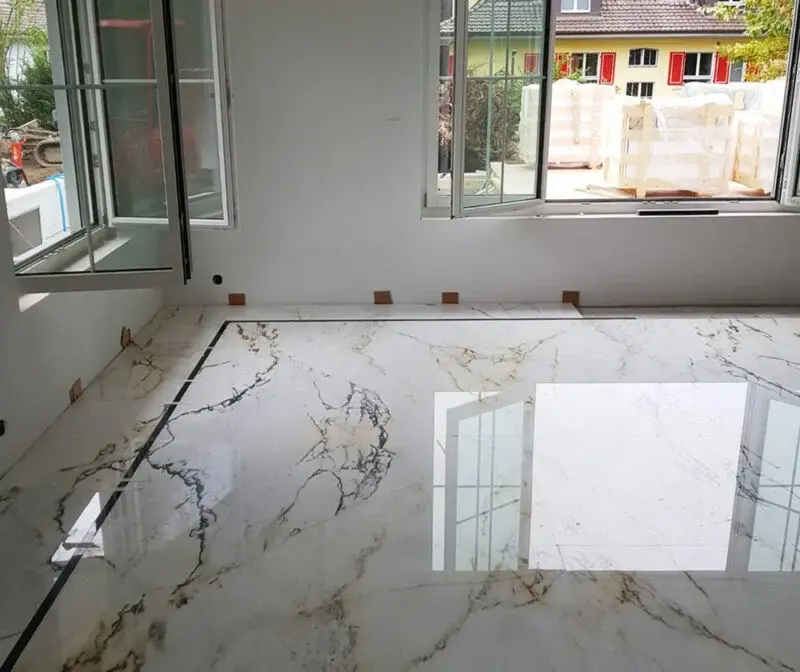
Which Is the Best Polish for Marble?
So what actually counts as the best polish for marble? There is no bottled product that does this job on its own. What genuinely restores marble is a mechanical process, grinding and polishing the stone with progressively finer diamond abrasives until the surface reflects light evenly again. Diamond polishing is the professional standard today, and for good reason. It removes the actual damaged layer of stone rather than covering it with something else, which means the result lasts and the scratches do not simply reappear a month later. Older techniques, like polishing compounds that relied on lead, have mostly disappeared, partly for health reasons and partly because the shine they produced never lasted as long as a proper diamond finish. Wax based polish is still sold in some hardware stores in Dubai, and it can make a floor look glossy for a short time, but it forms a thin film on top of the stone that scuffs easily under regular shoes and does nothing for scratches or etching underneath. Marble polishing powders and pastes sit somewhere in between. They can help with very light dullness, but they do not have the strength to fix real scratch damage or the kind of etching that hard water leaves on a counter.
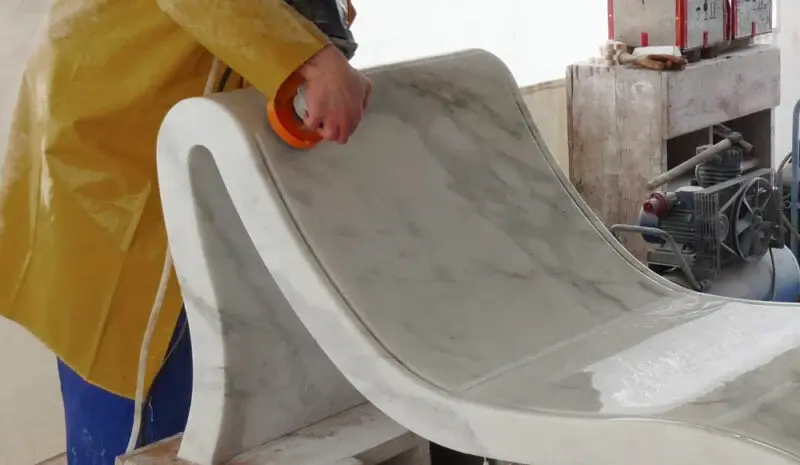
What Is the Best Way to Polish Marble?
The best way to polish marble properly follows a set order, and skipping a step is usually the reason a newly polished floor loses its shine again within a few months. It starts with an inspection, since not every marble type responds the same way to grinding. Carrara, Botticino, and local stone all behave differently, and a technician who understands that will choose a different compound and pressure for each. If the floor has deep scratches or uneven tile edges, coarse diamond pads grind down the damaged top layer first, and for floors left untouched for years, this stage often overlaps with a full marble restoration rather than a light polish. From there, progressively finer pads bring the surface back to an even, reflective finish, working from a rough grit up to a smooth, almost mirror like result. The final and often overlooked step is sealing. A penetrating sealer protects the freshly polished stone from moisture and everyday wear, and in a city like Dubai, where hard water and humidity are constant, skipping this step is one of the most common reasons marble dulls again so quickly after being professionally polished.
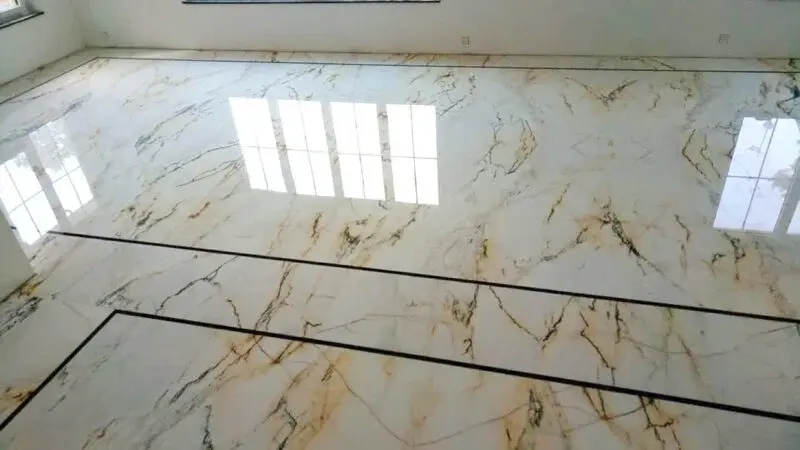
Not every marble surface needs a full professional treatment, though. If your floor, table, or counter only has light dullness in a small area rather than real scratches or staining, there are a few simple things you can try at home first. Start by dusting the surface with a soft, dry cloth to remove loose grit that could scratch the stone further if you rub it in. From there, a small amount of mild, pH neutral soap mixed into warm water works well for general cleaning, applied gently with a soft cloth rather than anything abrasive. Avoid acidic cleaners like vinegar or lemon based sprays entirely, since marble reacts to acid by etching, which leaves dull marks that look worse than the dust you started with. For very light dull patches, a soft woolen cloth soaked in warm water and rubbed in small circular motions can sometimes bring back a bit of shine on its own. A gentle paste of baking soda and water can help with minor dull spots too, applied carefully and rinsed off completely afterward so no residue is left behind. Whatever product you use, testing it on a small, hidden area first is always worth the extra few minutes, since even mild products can behave differently depending on the exact type of marble you have. These home methods are genuinely useful for upkeep between professional visits, but if the surface needs more than a wipe down, our marble cleaning service is the next step up before real polishing is needed.
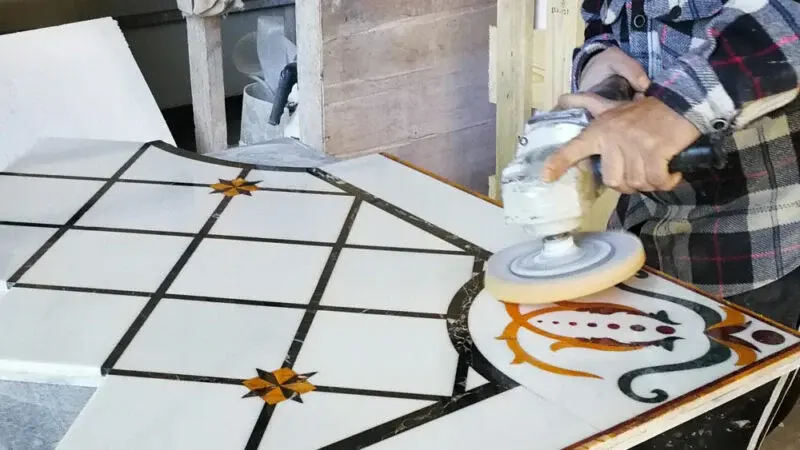
Which Is the Best Marble Polishing Company in Dubai?
If the job is bigger than something you can handle at home, choosing the right marble polishing company in Dubai matters more than most people expect. The clearest sign of a company worth hiring is one that inspects your marble in person before naming a price, rather than quoting a number over the phone without ever seeing the actual condition of the stone. A company that uses dust controlled diamond equipment, explains which finish they recommend and why, and seals the surface once polishing is complete is far more likely to give you a result that lasts. If a company hesitates to give you a written price after inspection, or seems unsure about the difference between marble types, that is usually a sign to keep looking. You can read more about our team and background on our about us page, or see how our own process works on the homepage.
How Much Does It Cost to Polish a Marble Table?
Cost is often the deciding factor, especially for something as specific as a marble table. In Dubai, polishing a marble table usually falls somewhere between AED 300 and 700, and where your job lands in that range depends mostly on three things, the size of the surface, the type of marble, and whether grinding is needed before the polishing stage even begins. A dining table with only light etching from spilled drinks will sit closer to the lower end of that range. A larger table that has years of scratches from laptops, cutlery, or daily use will usually cost more, simply because more grinding is required to get the surface level again before it can be polished to a proper shine. A quick set of photos sent over WhatsApp is usually enough for a rough estimate, though a technician will still want to see the table in person before confirming a final price.
Marble is one of those materials that rewards a little patience. It can be dulled by years of Dubai's sand, sun, and hard water, whether it sits in a beachfront villa on Palm Jumeirah or a family kitchen further inland, but it can also be brought back close to its original condition with the right process, whether that means a careful home routine for light upkeep or a full diamond polish for a floor that has been neglected for years.